Water Damage Restoration in Greenbelt, MD
A burst supply line is only one way water can enter a Greenbelt property. Intense rainfall, stormwater that cannot drain quickly enough, plumbing failures, appliance leaks, and moisture moving through lower levels can all leave floors, walls, and contents wet. The important question is not just where the water is visible, but how far it has traveled. RestoraMax responds 24/7 from its Central Maryland operation, with IICRC-certified, licensed and insured technicians and a stated 30–45-minute average on-site response. The team uses professional extraction, drying, and moisture-monitoring equipment, then coordinates the repair work required after mitigation.
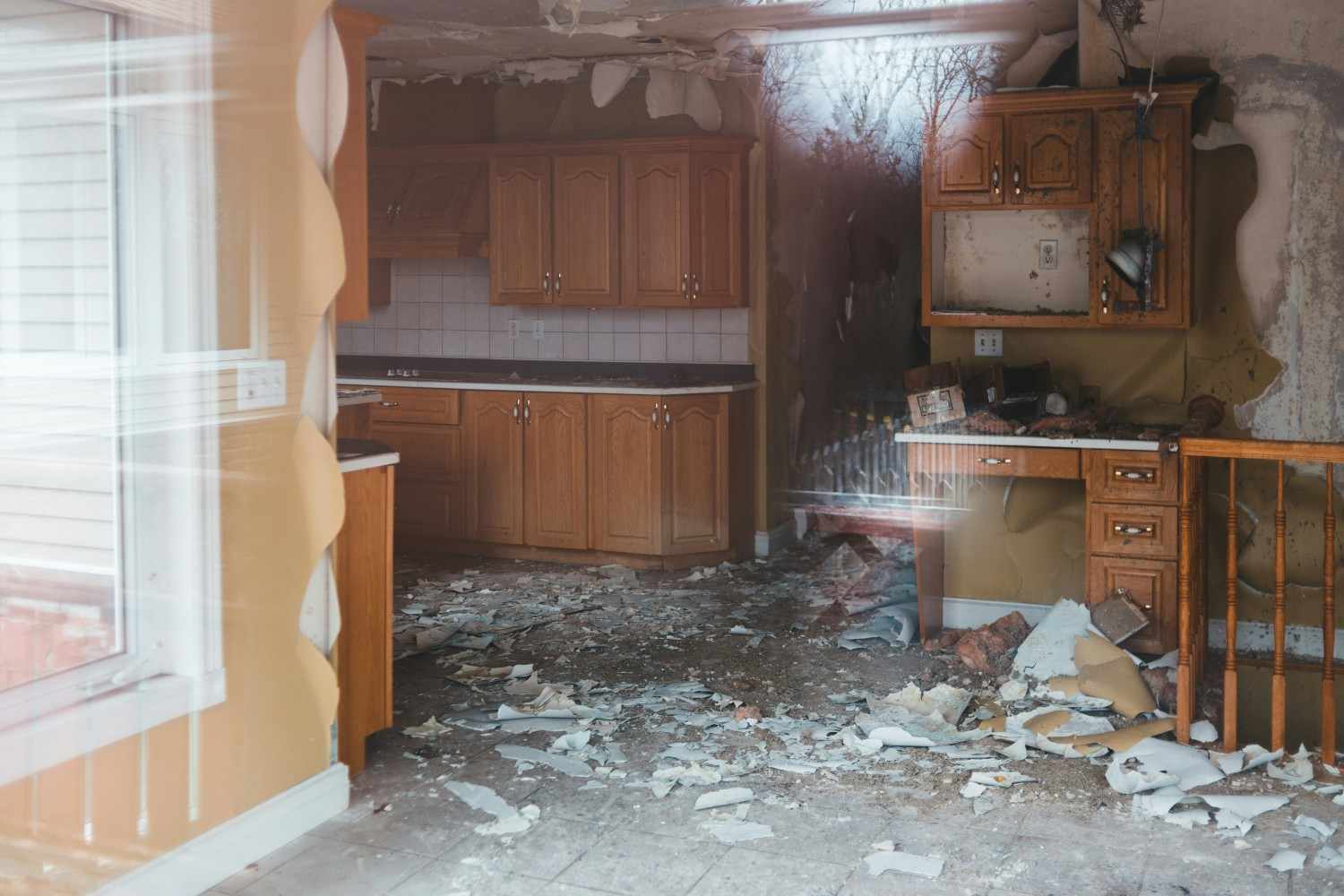
A Water Recovery Plan for Greenbelt Homes and Businesses
Rapid Removal of Standing Water
Water left on floors can migrate into edges, seams, subfloors and lower wall sections. Professional extraction reduces the volume of water that needs to be managed and gives the drying process a controlled starting point.
Flooring & Subfloor Moisture Control
Flooring can look dry while moisture remains below the surface. The condition of hardwood, laminate, vinyl, carpet, and subfloor materials is evaluated individually so salvageable materials can be dried where practical and damaged sections can be identified for repair.
Moisture Mapping Beyond the Visible Damage
Water does not always stop at the edge of the puddle. Moisture readings help identify affected walls, flooring, cavities, and other materials that may not show obvious staining, allowing drying equipment to be placed where it is actually needed.
Cleanup for Flood- or Leak-Affected Materials
The source and condition of the water influence the cleanup method. After extraction, affected surfaces and materials are assessed for cleaning, removal and sanitation so the restoration plan reflects the actual type of loss rather than treating every water event the same way.
Repairs After the Drying Phase
Drying does not always mark the end of the job. Where water has damaged drywall, flooring, insulation, cabinetry or other finishes, the affected space may need rebuilding. The reconstruction team can continue the work so the property can move from mitigation to a finished repair without an unnecessary handoff.
HOW THE PROPERTY MOVES FROM WET TO RESTORED
From initial inspection through final repairs, here is the step-by-step process we follow to restore water-damaged Greenbelt properties safely and thoroughly:
SOURCE CHECK & SAFETY ASSESSMENT
We start by identifying the likely source, checking for immediate hazards, and determining which areas and materials have been affected. This establishes the initial scope before extraction begins.
EXTRACTION OF STANDING WATER
Professional extraction equipment is used to remove accessible standing water from floors and other affected areas. The objective is to reduce the water load before it spreads farther into porous materials.
CONTROLLED STRUCTURAL DRYING
Air movement and dehumidification are set according to the property's conditions. Moisture readings are repeated during drying so equipment can be adjusted as materials move toward an appropriate dry condition.
CLEANING & SECONDARY-DAMAGE CONTROL
Once excess moisture is controlled, affected surfaces and contents are evaluated for cleaning. Where lingering dampness creates a mold concern, the next steps are identified before the problem expands.
REPAIR, REFINISHING & FINAL REVIEW
Materials that cannot be restored through drying and cleaning can move into repair or replacement. The project is then reviewed as a whole rather than treating mitigation and the finished space as separate jobs.
GREENBELT-SPECIFIC WATER CONDITIONS TO WATCH
STORMWATER BOTTLENECKS IN CENTRAL GREENBELT
Greenbelt's 2026 Flood Resilience Plan identifies locations where heavy rainfall can overwhelm portions of the stormwater system, including the Lakeside and Westway area and the Recreation Center area. The city's analysis also identified surface-flow collection areas around Crescent Road, Hillside Road and other parts of central Greenbelt.
INDIAN CREEK FLOODPLAIN EXPOSURE
The city's flood-resilience analysis maps the 100-year and 500-year Indian Creek floodplains through parts of Greenbelt. Flood risk is therefore property-specific, and owners should rely on current floodplain information rather than assuming nearby properties share the same exposure. [Source: City of Greenbelt, 2026 Flood Resilience Plan]
OLDER GREENBELT HOMES & WATER SYSTEMS
Greenbelt's historic planned community contains some of the oldest residential housing in the city, and local reporting has documented recurring concerns around aging water-supply pipes in the Greenbelt Homes area. A leak inside an older property can therefore create a very different restoration problem from a surface-only stormwater event.
WHAT TO DO WHEN WATER ENTERS YOUR PROPERTY
STOP THE SOURCE ONLY IF IT IS SAFE
If a failed pipe or appliance is still releasing water and the shutoff can be reached safely, stop the flow at the source. Do not enter a hazardous area simply to reach a valve.
KEEP AWAY FROM WET ELECTRICAL AREAS
Do not handle outlets, appliances, cords or electrical equipment that may have been exposed to water. When electrical safety is uncertain, leave the area and arrange a qualified assessment.
MOVE PORTABLE BELONGINGS
Once the area is safe, move electronics, documents, small furniture and other portable belongings away from affected areas. Avoid walking through contaminated or unstable water just to save an item.
PHOTOGRAPH THE LOSS
Document visible water, damaged materials and affected belongings once it is safe to do so. Keep receipts and records for emergency work and related expenses.
CALL FOR A PROFESSIONAL ASSESSMENT
If the problem is urgent, 24/7 restoration support can help determine the safest next step. Where prolonged moisture or musty odor remains, the assessment can also determine whether mold remediation is needed.
GREENBELT WATER DAMAGE QUESTIONS HOMEOWNERS OFTEN ASK
Why RestoraMax for Greenbelt Water Damage
Greenbelt's cooperative housing community has shared infrastructure that creates unique water damage scenarios, water from one unit affecting multiple others, shared plumbing systems that require coordination between the co-op management and individual residents. Our team is experienced with these complex urban scenarios (view our project gallery for local examples).
RestoraMax provides 24/7 emergency water damage restoration in Greenbelt MD including Historic Greenbelt, Greenbelt East, and all Greenbelt neighborhoods in Prince George's County. IICRC certified, licensed and insured.